

Virtual airline news covers updates from online flight-simulation communities, including new virtual airline launches, route changes, fleet additions, pilot events, and software developments. A virtual airline is not a real commercial airline. It is an organized hobby group where people use flight simulators to fly scheduled routes, submit flight reports, gain ranks, and join online aviation events.
Many people find this topic while searching for flight simulators such as Microsoft Flight Simulator or X-Plane. Others want to join an online airline community but are not sure where to start. This guide explains what virtual airline news means, what types of updates matter, and how a new pilot can find a safe and active community.

What Is a Virtual Airline?
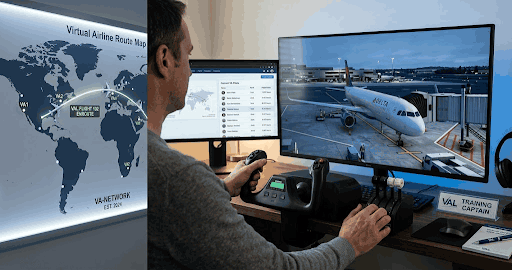
A virtual airline, often called a VA, is an online community built around flight simulation. Members fly virtual aircraft using software such as Microsoft Flight Simulator, X-Plane, Infinite Flight, or other supported simulators.
The group may represent a real airline, such as a virtual version of British Airways, Delta, Emirates, or Lufthansa. Other groups create their own fictional names, hubs, aircraft fleets, and route networks.
Unlike a real airline, a VA does not transport actual passengers or cargo. Everything happens inside a simulator. Still, many communities try to copy real aviation procedures so that flights feel more organized and realistic.
A virtual airline can offer:
- Scheduled flights between real or fictional airports
- Aircraft fleets and airline liveries
- Pilot ranks, awards, and progress systems
- Flight tracking and pilot reports
- Training for new virtual pilots
- Group flights, tours, and community events
- Discord servers, forums, and crew-center dashboards
For basic background, the Wikipedia explanation of virtual airlines describes them as hobby organizations that use flight simulation to model airline operations.
What Does Virtual Airline News Cover?
Virtual airline news is not one official news service. It is a broad topic that includes updates from many separate virtual-airline communities, flight-simulation networks, and simulator developers.
The most useful updates usually involve changes that affect pilots directly. For example, a VA may announce a new aircraft type, add routes to a new region, launch a special tour, or change the way flight reports are recorded.
Here are the most common types of news:
- New virtual airlines: New VA communities may launch with a new brand, fleet, and route network.
- Fleet changes: A group may add a Boeing 787, Airbus A320, regional jet, cargo aircraft, or classic aircraft for members to fly.
- Route expansions: Airlines often add new city pairs, hubs, holiday routes, or seasonal schedules.
- Pilot events: Many groups hold group flights, air shows, fly-ins, charity events, or long-haul challenges.
- Website updates: A VA may introduce a new crew center, mobile-friendly dashboar-d, route map, or automatic flight tracker.
- Recruitment news: Communities may open applications for pilots, dispatchers, trainers, event staff, or managers.
- Simulator support: Some VAs announce support for a newer simulator version, aircraft add-on, or multiplayer network.
A useful rule is to check the date on every announcement. Some VA websites stay online for years even when their last news post is very old. An airline with recent completed flights, active events, and current announcements is usually a better choice for a new pilot.
Recent Flight Simulation Updates That Matter
Virtual airline news often follows bigger changes in flight simulation. When a simulator receives a major update, virtual airlines may need to update their instructions, supported aircraft, tracking tools, or recommended settings.
Microsoft Flight Simulator published its Sim Update 6 in August 2026. The update included the return of bush trips, support for Nvidia DLSS 4.5, aircraft updates, and a large number of bug fixes. These kinds of updates can affect how pilots fly, how smoothly aircraft perform, and whether a VA’s recommended add-ons need changes. Microsoft Flight Simulator’s Sim Update 6 briefing provides the official details.
Microsoft also announced a partnership with Lufthansa during Gamescom 2026 for a set of official liveries in Microsoft Flight Simulator 2024. Airline liveries matter to virtual pilots because they help create a more realistic airline experience during scheduled and group flights. Threshold’s report on the Lufthansa partnership explains the announcement.
These are simulator-industry updates, not announcements from a specific virtual airline. Still, they can influence the wider virtual airline community because pilots and managers rely on flight-simulation software every day.
VATSIM and IVAO: Networks Used by Virtual Pilots
Many virtual airlines allow members to fly offline, which means the pilot flies alone inside the simulator. Others encourage or require online flying through multiplayer aviation networks.
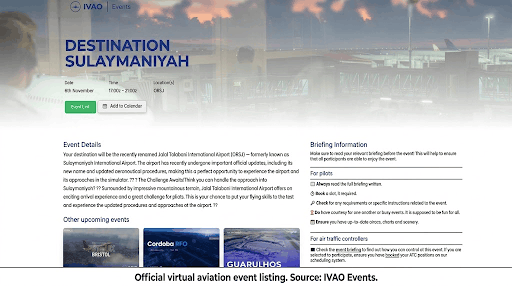
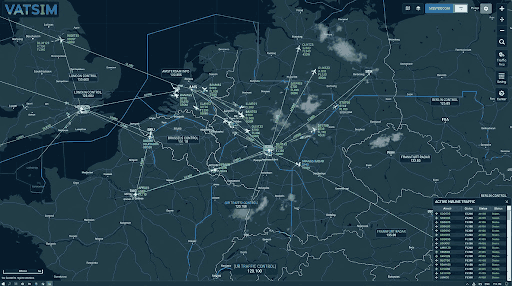
The two best-known networks are VATSIM and IVAO. They add other human pilots and volunteer air traffic controllers to the simulation. This can make a virtual airline flight feel closer to real aviation because pilots may need to follow clearances, taxi instructions, radio procedures, and air-traffic-control directions.
| Feature | VATSIM | IVAO |
| Main purpose | Online flight simulation with live ATC | Online flight simulation with live ATC |
| Participants | Virtual pilots and volunteer controllers | Virtual pilots and volunteer controllers |
| Use with virtual airlines | Commonly supported by many VAs | Commonly supported by many VAs |
| Flight style | Often focused on realistic procedures | Often focused on realistic procedures |
| Membership | Free account required | Free account required |
| Best starting point | Read network rules and training material | Read network rules and training material |
You can explore the rules, software, and pilot resources on the official VATSIM website. VATSIM’s official pages are useful for new pilots because they explain expected behavior before someone joins a busy airport or event.
New pilots should not feel forced to fly online from day one. Offline flying is a good way to learn aircraft controls, flight planning, radio basics, and landing practice before entering a live environment.

How Virtual Airlines Use Tracking Tools
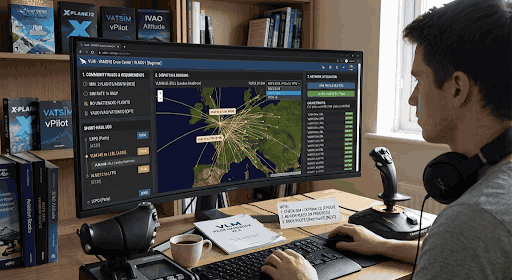
A virtual airline needs a way to confirm that members completed their flights. In early communities, pilots often filled in a report manually after landing. Many VAs now use tracking software that connects the simulator to the airline’s crew center.
The tracker can record basic information such as departure airport, arrival airport, flight time, altitude, speed, aircraft type, and landing details. The VA may then add those hours to a pilot’s profile.
Common features of a virtual airline crew center include:
- Flight booking from an airline schedule
- Pilot profiles and flight logs
- Rank systems based on completed flights or hours
- Aircraft assignments and fleet records
- Route maps and airport hubs
- Tours and event sign-ups
- Awards and leaderboards
- Flight reports, often called PIREPs
Not every virtual airline uses the same tracker. Before joining, check whether the software works with your simulator and operating system. Some groups use automatic tracking, while others allow simple manual reports for casual pilots.
Do not download tracking software from random websites or unofficial chat links. Use the VA’s official website and verify that the download instructions are current.
How to Find an Active Virtual Airline
Choosing an active VA is more important than choosing the biggest one. A smaller group with friendly staff, recent events, and clear rules can be more enjoyable than a large website with no current activity.
Before joining, check these seven things:
- Recent news posts: Look for current announcements, upcoming events, or recent schedule updates.
- Recent pilot activity: Check whether the site shows recent flights, pilot reports, or online members.
- Simulator compatibility: Confirm support for Microsoft Flight Simulator, X-Plane, Infinite Flight, or your chosen simulator.
- Routes and aircraft: Choose an airline with destinations and aircraft you actually want to fly.
- Community rules: Read the rules about activity requirements, behavior, and online networks.
- Training support: Newer pilots benefit from communities that provide guides, mentors, or beginner group flights.
- Privacy and safety: Do not share payment details or unnecessary personal information just to join a hobby group.
A real virtual-airline community should clearly explain that it is not connected to the real airline unless it has stated official permission. Be careful if a site makes unrealistic promises, claims to issue real pilot licenses, or asks for financial details without a clear reason.
Virtual Airline News vs Real Airline News
The words can sound similar, but virtual airline news and commercial airline news are very different.
| Virtual airline news | Real airline news |
| Covers flight-simulation communities | Covers real aviation companies |
| Reports new virtual routes and fleets | Reports actual route launches and aircraft orders |
| Discusses pilot ranks and online events | Discusses passengers, staff, fares, and regulations |
| Uses flight simulators and hobby software | Uses real aircraft and airline operations systems |
| Flights have no real passengers | Flights carry passengers or cargo |
| Usually run by volunteers or hobby groups | Run by licensed commercial operators |
For example, a virtual airline may announce a new simulated Airbus A350 route between two airports. That does not mean the real airline has launched the same service. Always check the source before sharing aviation news.
This difference matters for students, aviation fans, and new simulation players. If you want airport delays, ticket prices, aircraft safety news, or real airline routes, search for commercial aviation news. If you want simulator events, virtual fleets, pilot communities, and online ATC, virtual airline news is the right topic.

Frequently Asked Questions
Is virtual airline news about real airlines?
No. It usually covers flight-simulation communities. A virtual airline may copy a real airline’s name, routes, or livery, but it is still a separate hobby group.
Do I need a real pilot license?
No. Most virtual airlines welcome beginners and hobby pilots. You may need to learn the group’s rules and flight-report process, but a real pilot license is not normally required.
Can I join a virtual airline for free?
Many virtual airlines are free to join. You may still need a flight simulator, internet access, and possibly aircraft add-ons, depending on the group.
Do virtual airlines use real flight schedules?
Some do. They may copy real airline routes and flight numbers. Others use fictional schedules or allow pilots to choose routes freely.
Is VATSIM required to join?
Not always. Some VAs support offline flying, while others prefer or require VATSIM or IVAO for certain events. Read the airline’s rules before applying.
Final Thoughts
Virtual airline news helps flight-simulation fans keep track of new communities, aircraft fleets, route expansions, online events, and simulator updates. It is not about real commercial airlines, although some VAs model their operations after well-known carriers.
For the best experience, choose a community with recent activity, clear rules, safe download links, and support for your preferred simulator. Start offline if you are new, learn the basics, then consider flying with other pilots through a live network. Virtual airline news can lead you to a hobby community where each flight has a route, a purpose, and people to share it with.