

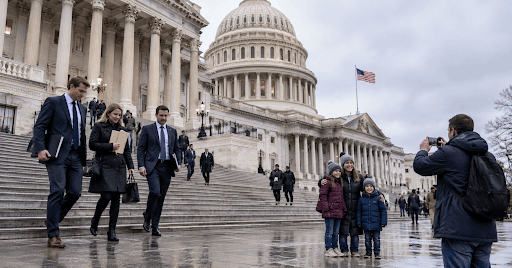
Trump’s judicial nominees are the federal judges he picks and the Senate must confirm. In his second term, Reuters reports the Senate has confirmed 57 so far, and Republicans are rushing more through before Democrats take over the chamber in January. Some Republicans are pushing back too.
This topic gets loud fast, and the loudest parts aren’t always the most useful. So let’s slow down and go in four layers: the numbers, the names, the rules and the fight itself. Every claim below comes from a named outlet, and every quote belongs to the person who said it.
Layer One: The Numbers on Trump’s Judicial Nominees
Start with the scoreboard. These figures come from different outlets and different dates, so the “as of” note matters.
| Measure | Figure | Source and date |
| Confirmed in second term | 57 | Reuters, November 15, 2026 |
| Article III judges appointed through Nov. 1 | 56 | Ballotpedia, November 4, 2026 |
| Confirmed by early February | 33 | Fox News, February 9, 2026 |
| Nominees now pending | 23 | Reuters, November 15, 2026 |
| Current vacancies | 28 | Yahoo News, November 11, 2026 |
| Vacancies expected soon | 15 | Yahoo News, November 11, 2026 |
Now let’s put those in context. Ballotpedia says 56 is the third highest total at this point in a president’s second term since Bill Clinton. The average is 79, Barack Obama had the most with 107, and George W. Bush had the fewest with 53.
A few quick calculations, using those numbers:
- 79 minus 56 is 23, so Trump is 23 judges below the average pace.
- 56 divided by 79 is about 0.71, or roughly 71% of the average.
- On appeals courts, Ballotpedia counts 10 for Trump against a median of 18. That’s 8 fewer.
- Add current and expected vacancies: 28 plus 15 equals 43.
One more comparison. A Yahoo News report says Trump appointed more than 230 judges in his first term, including three Supreme Court justices. Fox News puts his first term confirmations at 234. If we use 234, then 57 divided by 234 is about 0.24. So the second term is about a quarter of the way to the first term’s total. The assumption here is that you count only confirmed judges and ignore differences in court levels.
Layer Two: The Names Behind Trump’s Judicial Nominees
You can’t understand Trump’s judicial nominees by totals alone. A few specific nominations explain most of the drama, and each one shows a different kind of pushback. Here’s what Reuters and Yahoo News reported.
| Nominee or court | What reporters say |
| Lee Rudofsky, 8th Circuit | The White House withdrew his nomination after Arkansas Sens. John Boozman and Tom Cotton opposed him |
| J. Cody Hiland, 8th Circuit | An Arkansas Supreme Court justice nominated in Rudofsky’s place |
| T. Elliot Gaiser, Texas | Chosen without the usual senator led screening, and Sen. John Cornyn hasn’t committed to him |
| Zach West, Oklahoma | Sen. Alan Armstrong withdrew support, and Sen. Thom Tillis backs that opposition |
| Daniel Domenico, 10th Circuit | A Colorado judge whose nomination was scheduled for a Monday vote |
Notice the pattern. Most of the friction isn’t Democrats versus Republicans. It’s the White House versus home state senators, including Republican ones. That’s an easy detail to miss in a partisan story.
Democrats have their own objections to some of Trump’s judicial nominees. According to Yahoo News, Sen. Dick Durbin, the top Democrat on the Judiciary Committee, objected to Texas nominees James Sullivan and Gaiser. The report says Sullivan lost a reelection bid to the Texas Supreme Court, and that Gaiser leads the Justice Department’s Office of Legal Counsel with a one year clerkship as his only Texas tie. Those are Durbin’s points as reported, not settled facts.
Layer Three: How the Senate Handles Trump’s Judicial Nominees
Here’s the basic path for one of Trump’s judicial nominees to a trial court. This is the general process, not a quote from any one source.
- The president names a nominee.
- The Senate Judiciary Committee holds a hearing.
- The committee votes to send the nominee to the full Senate.
- The full Senate votes to confirm.
Then there’s the blue slip. According to Reuters, a home state senator can block a trial court nominee by withholding a blue slip, a form that signals support to the committee. The White House generally honors the custom, but not always.
Fox News reported in February that the practice is over a century old, and that Judiciary Committee Chair Chuck Grassley changed it in 2017 so appeals court judges could skip it. That same report says Trump has urged Republicans to “get rid of blue slips,” arguing it slows confirmations. Tillis, a Republican, replied, “Nuking the blue slip would be a huge mistake,” and some Republicans argue the tool will be valuable to them when they’re in the minority.
Layer Four: Why the Fight Over Trump’s Judicial Nominees Is Heating Up
The timing explains almost everything. Reuters reports that Democrats take control of the Senate in January, and Republicans currently still control it. Majority Leader John Thune said, “The priority is going to be getting the judges across the finish line,” according to Yahoo News. Reuters says the White House expects all pending nominees to be confirmed this year, while noting there’s no formal deadline.
Here’s how each side frames the push on Trump’s judicial nominees, based on what they said.
| Voice | Position as reported |
| Chuck Grassley, Republican, Judiciary chair | “Historically, this committee has shortened timelines when circumstances warrant it.” |
| Dick Durbin, Democrat, top Democrat on the committee | Republicans are breaking “numerous longstanding standards” to rush through nominees, and Democrats shouldn’t “expedite nominees who have not been carefully vetted” |
| Sheldon Whitehouse, Democrat, expected next chair | Called for “a hard reset on the nominations process next Congress” |
| Thom Tillis, Republican, retiring | Said senators deserve more “respect” from the White House |
| Alan Armstrong, Republican | Said the White House “basically ignored” the candidates his office sent |
Quotes can vary slightly between outlets, so check the original pages before you repeat them.
A conservative legal scholar, Ed Whelan, offered a blunt view in the Yahoo News report. He said, “No one, or nearly no one, is going to get confirmed” once Democrats take over, and that Trump “has managed to put in jeopardy his biggest achievement.” That’s one expert’s prediction, not a fact, and others may see it differently.
Two Ways to Read the Same Numbers
Supporters of the push argue the Senate should use the time it has. Thune called judges the priority, and Grassley said the committee has shortened timelines before when circumstances warrant. From that view, 57 confirmations show steady progress for Trump’s judicial nominees, and the 23 still pending should get votes while Republicans run the chamber.
Critics see it differently. Durbin says the rush skips careful vetting, and Whitehouse wants a reset next year. From that view, the speed itself is the problem, and the review of Trump’s judicial nominees should slow down, not speed up.
Both camps use the same facts. They disagree about what the pace means. And as Tillis and Armstrong show, not every complaint comes from the other party. Some of the sharpest comments about Trump’s judicial nominees come from inside the president’s own party.
What Happens in January
For Trump’s judicial nominees, Yahoo News says Whitehouse is expected to lead the Judiciary Committee next year, and that vacancies still open at the end of this Congress will likely stay open for at least two years. For comparison, the report notes that in Obama’s last two years, with Republicans controlling the Senate, only 20 of his district and appeals nominees were confirmed, and Merrick Garland never got a vote.
Democrats could look for deals with the White House on district court picks in their own states, the report adds, though it’s unclear whether either side wants that.
What about the Supreme Court? The same report says Justices Clarence Thomas, 78, and Samuel Alito, 76, are the oldest on the court. Alito has said he is “here for another term,” and neither is expected to retire during the lame duck session.
How to Follow Trump’s Judicial Nominees Without Getting Lost
Use this quick guide.
- If you see a big total, ask what date it’s “as of,” and whether it counts all judges or only certain courts.
- If you see “resistance,” find out who. Republican home state senators and Democrats are very different stories.
- If you see a quote, read the full piece or watch the video before repeating it.
- If you see a prediction, treat it as an opinion. Predictions aren’t results.
- If you want the official list, the federal courts website keeps confirmation records.
Final Thoughts
Trump’s judicial nominees are a numbers story, a names story and a rules story all at once. The count stands at 57 confirmations in the second term, per Reuters, but the January change in Senate control puts a clock on everything that’s pending. Whatever you think of the picks, keep the facts, the claims and the predictions in separate piles.
This article is general information and isn’t legal or political advice. Figures change quickly, so check the original sources. It isn’t affiliated with any party or campaign.
FAQ
How many of Trump’s judicial nominees have been confirmed in his second term?
Reuters reports 57 confirmed so far. Ballotpedia counted 56 Article III judges through November 1, 2026.
Which Supreme Court justices did Trump nominate?
In his first term, Yahoo News says he appointed three Supreme Court justices. Fox News notes Neil Gorsuch was confirmed in his first year.
What is a blue slip?
It’s a Senate custom where a home state senator signals support for a trial court nominee. Reuters says a senator can block a nominee by withholding it.
Why are some Republicans resisting Trump’s judicial nominees?
Reuters says several have blocked or questioned nominees from their own states, saying the White House has sometimes ignored their input.
What happens to Trump’s judicial nominees in January?
Reuters says Democrats take control of the Senate, and Yahoo News says unfilled vacancies will likely stay open for at least two years.